

CRM vs ERP: What’s the Difference?
Understand the difference between CRM and ERP software, their key features, use cases, and which solution may be right for your business.
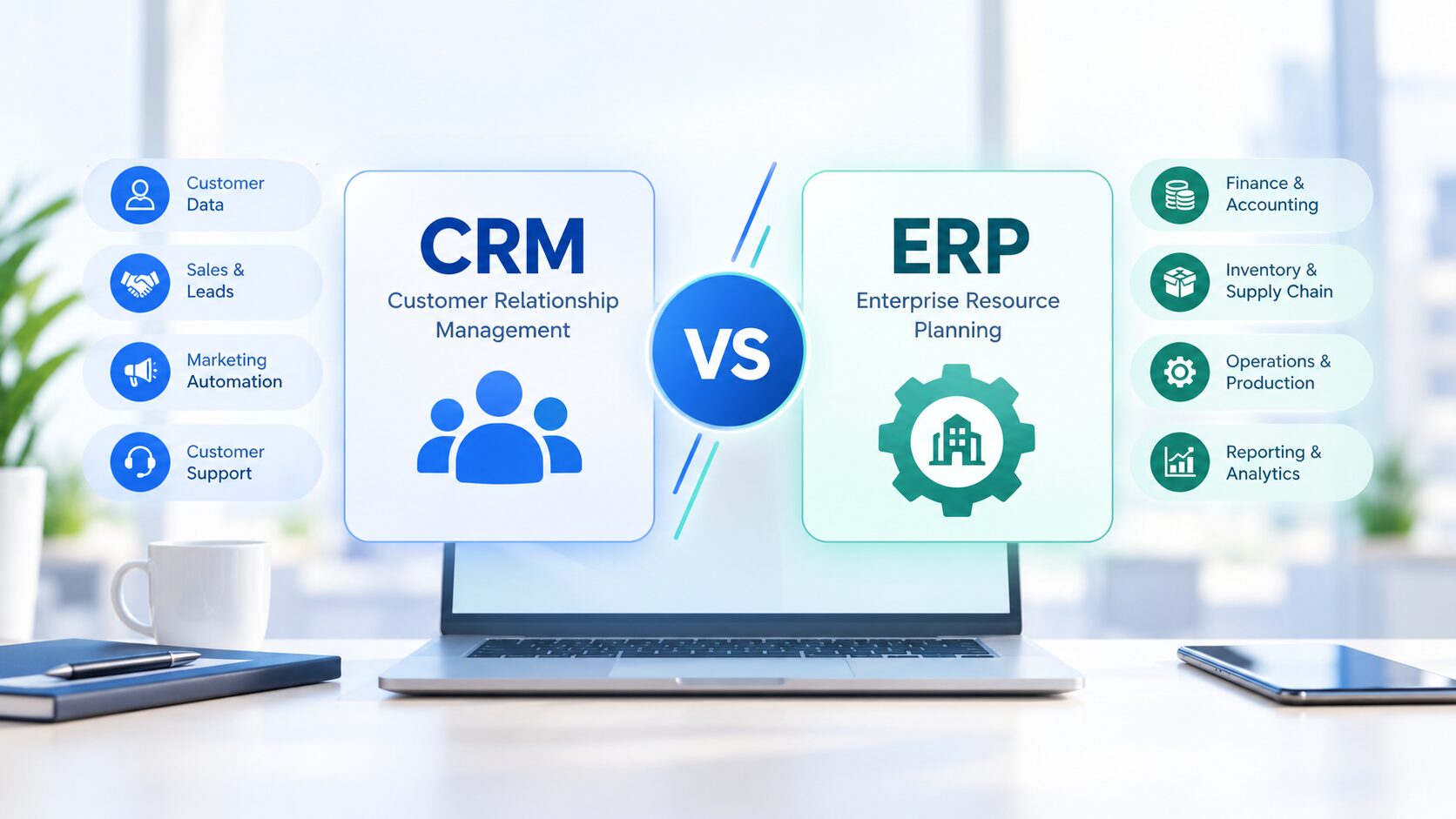
Businesses use different software to manage sales, customers, finance, employees, inventory, and daily operations. Two common solutions are CRM and ERP.
But what is the difference between CRM and ERP, and which one is right for your business?
CRM vs ERP: The Simple Difference
CRM (Customer Relationship Management) focuses on customers, leads, sales, and follow-ups.
ERP (Enterprise Resource Planning) focuses on internal business operations such as finance, inventory, HR, purchasing, and resources.
Customer Relationship Management
Manage Customers & Sales
Enterprise Resource Planning
Manage Business Operations
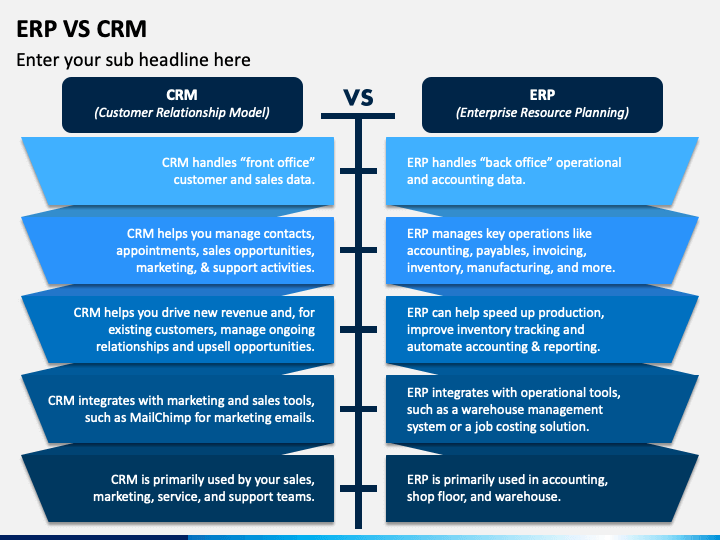
CRM vs ERP Comparison
| CRM | ERP |
|---|---|
| Manages leads and customers | Manages business operations |
| Focuses on sales and marketing | Focuses on finance and resources |
| Tracks customer interactions | Tracks inventory and transactions |
| Automates sales follow-ups | Automates operational processes |
| Used mainly by sales & marketing teams | Used across multiple departments |
When Do You Need CRM?
A CRM system is useful when your main priority is growing sales and improving customer relationships.
- Manage leads in one place
- Track sales opportunities
- Automate follow-ups
- Manage customer information
- Monitor sales performance
- Improve customer communication
For example, a growing service business can use CRM to capture website enquiries, assign leads to salespeople, schedule follow-ups, and track conversions.
Related: Read our “What is CRM?” guide to understand CRM fundamentals.
When Do You Need ERP?
An ERP system is useful when your business needs better control over internal operations.
- Finance and accounting
- Inventory
- Procurement
- HR and payroll
- Orders
- Production
- Business reporting
For example, a manufacturing or retail business can use ERP to connect inventory, purchasing, sales, and accounting in one system.
Can CRM and ERP Work Together?
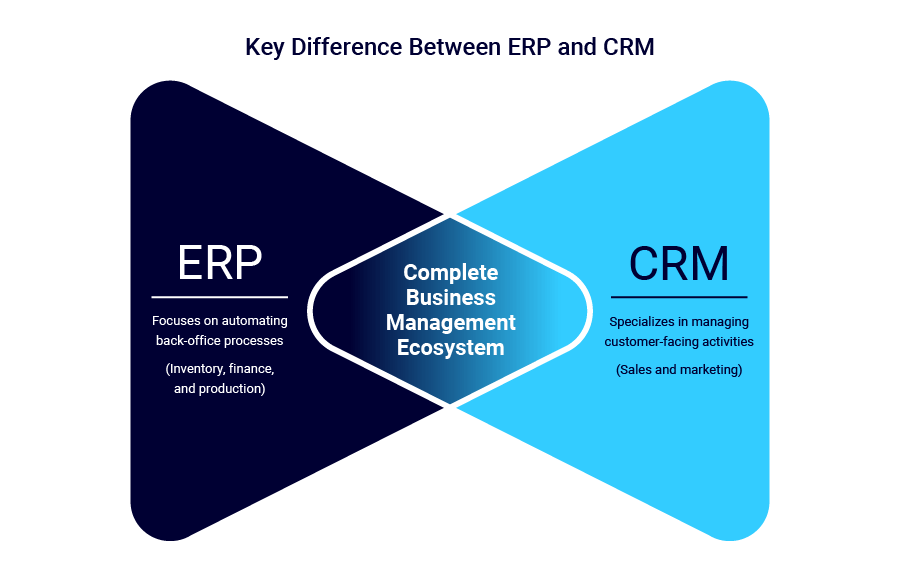
Yes. CRM and ERP integration can connect customer-facing activities with internal business operations.
A typical workflow could be:
CRM manages the customer and sales journey, while ERP manages the operational and financial processes.
This can reduce duplicate data entry, improve accuracy, and save time.
CRM or ERP: Which One Should You Choose?
The answer depends on your business needs.
Choose CRM if your priority is:
- Sales
- Leads
- Customers
- Follow-ups
Choose ERP if your priority is:
- Finance
- Inventory
- HR
- Procurement
- Operations
Customer management + Sales + Business operations
The best business management software is not necessarily the one with the most features. It is the one that solves your current business challenges and can grow with your organization.
Frequently Asked Questions
What is the main difference between CRM and ERP?
CRM focuses on customers, leads, and sales, while ERP focuses on internal business operations and resources.
Is CRM better than ERP?
Neither is universally better. CRM is better for customer and sales management, while ERP is better for managing broader business operations.
Can CRM and ERP be integrated?
Yes. CRM and ERP integration can connect sales, customers, orders, inventory, invoices, and other business processes.
Do small businesses need CRM or ERP?
It depends on the business. Sales-focused businesses may start with CRM, while businesses with complex operations may benefit from ERP.
Conclusion
CRM and ERP serve different purposes in a business. CRM focuses primarily on customers, leads, sales, and relationships, while ERP focuses on internal operations such as finance, inventory, HR, procurement, and resources.
Businesses should choose software based on their current requirements, workflow, team needs, and future growth plans.
For businesses that need both customer management and internal operations, integrating CRM and ERP can create a more connected and efficient business process.


